2014-5. Review. Houses in the archaeolology of the Trypillia-Cucuteni groups
Burned house remains are central to understanding the Trypillia–Cucuteni world, where domestic space was far more prominent than mortuary evidence. This article reviews how changing house forms and settlement patterns over two millennia reveal both innovation and enduring principles of household continuity.
In: Tracking the Neolithic House in Europe. – New York – London: SpringerScience, 2013. – P. 95-116.
M. Videiko, J.Chapman, B. Geydarska, N. Burdo
Houses in the archaeolology of the Trypillia-Cucuteni groups
The excavation of burnt, and occasionally unburnt, houses forms a key element of the story of Tripillia–Cucuteni archaeological excavations, since the domestic zone in these groups was much more developed than the mortuary domain. In the 2,000-year period of development across a wide area from the Carpathians to the Dnieper valley, there were considerable changes in the ways that houses were designed and built and, especially, in the agglomerations which they formed. There is also much evidence for the transformations of structures originally designed as domestic dwellings into workshops, ritual centres and places with specialised storage facilities. Nonetheless, these changes were nothing but variations on a dominant theme of household and house continuity, which forms the principal embodiment of principles and practices in the longue durée for these groups.
М. Відейко, Дж. Чапмен, Б. Гейдарська, Н. Бурдо
Будівлі у археології населення Трипілля-Кукутень
У статті розглянуто характер залишків будівель трипільської культури, питання їх походження. Значну увагу приділено інтерпретації результатів їх досліджень з визначенням основних сучасних тенденцій. Використано результати досліджень на поселенні Небелівка. Значення статті між іншим полягає у ознайомленні широкого кола фахівців за межами України з питаннями трипільського домобудівництва.
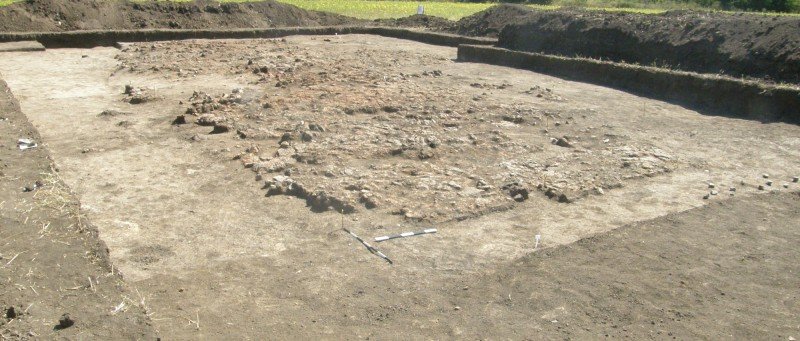
Nebelivka, 2009. Remains of dwelling A9.
Explore the Archive
Discover more research on Trypillia culture, archaeological findings, and ancient civilizations.
Journal Archive